


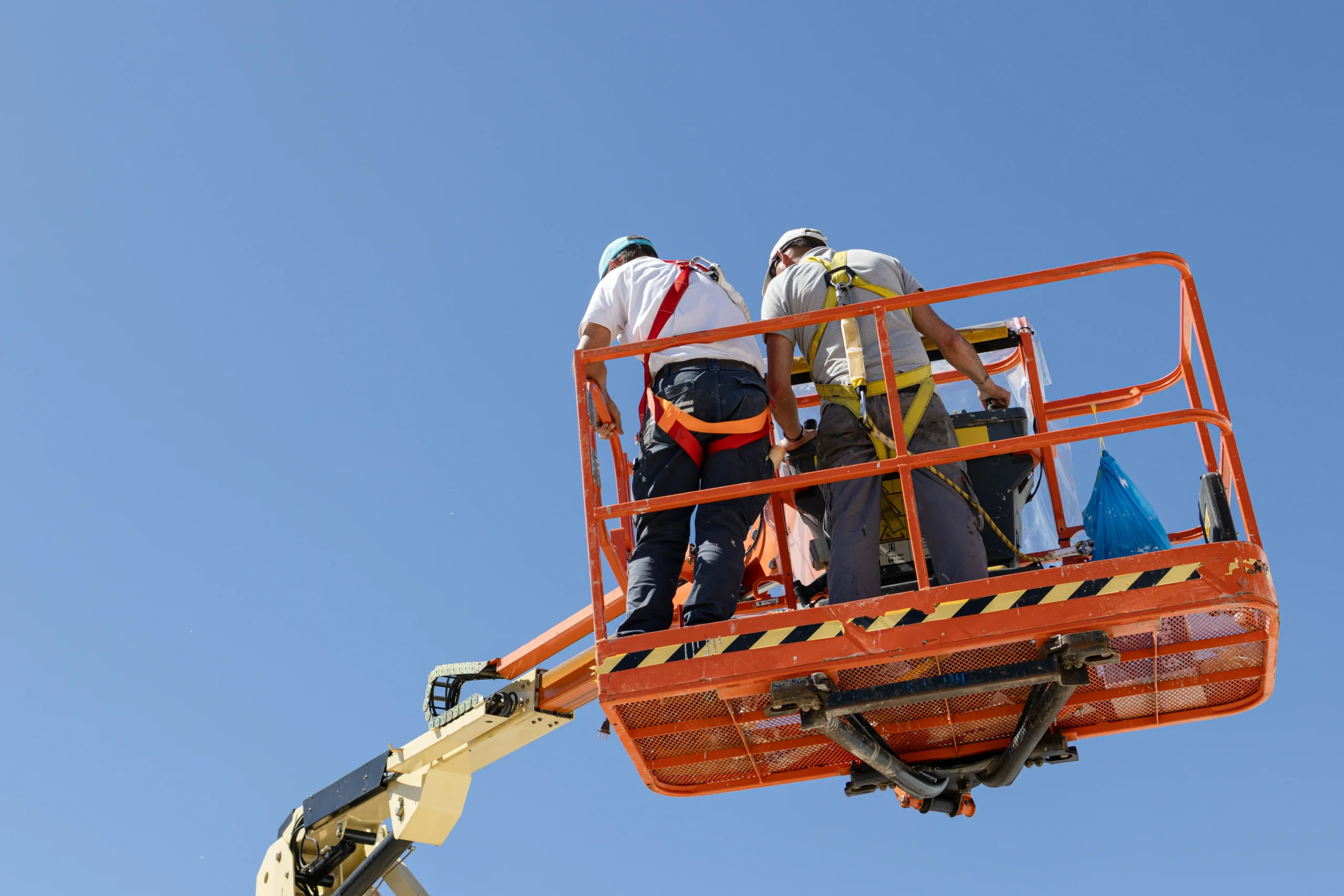
Aerial lifts are essential tools on construction sites, warehouses, and maintenance projects. They allow workers to safely reach elevated areas. However, improper use of aerial lifts leads to preventable accidents, injuries, and even fatalities every year. Understanding and avoiding common aerial lift mistakes is crucial to ensuring aerial lift safety for every operator.
1. Skipping the Aerial Lift Inspection
One of the most frequent errors is neglecting the aerial lift inspection before use. Each day, operators should check for leaks, worn cables, faulty brakes, and malfunctioning controls. Failing to do so can turn small mechanical issues into serious aerial lift accidents.
Key inspection areas include:
- Hydraulic fluid levels and leaks
- Tire pressure and condition
- Safety controls and emergency lowering functions
- Platform guardrails and gates
- Power source (battery or fuel) condition
2. Ignoring Aerial Lift Fall Protection
Aerial lift fall protection is one of the most overlooked safety practices. Operators must always wear a full-body harness with a properly secured lanyard attached to the lift’s anchor point. According to OSHA, about 25% of fatalities involving aerial lifts are fall-related.
Using proper fall protection means:
- Wearing a harness at all times while elevated
- Ensuring the lanyard is connected to a designated anchor point
- Never tying off to nearby structures or poles
- Avoiding leaning or climbing over guardrails
3. Overlooking Common Aerial Lift Hazards
Operators often underestimate common aerial lift hazards such as overhead power lines, unstable ground, and weather conditions. These factors can lead to electrocution, tipping, or loss of control.
Real-world example: In 2022, a worker in Ontario was electrocuted when his boom lift made contact with a live power line. The investigation revealed no spotter was assigned, and the lift was parked within 3 meters of a high-voltage source.
4. Overloading the Platform
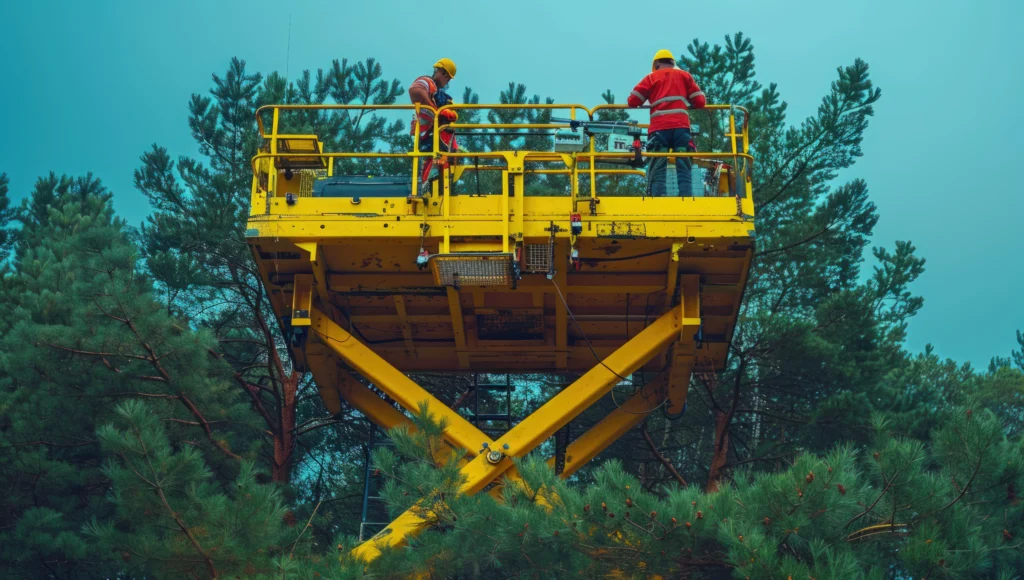
Exceeding the lift’s rated capacity is another major mistake. Too much weight or uneven distribution can cause the platform to tip or the lift’s components to fail. Ensuring that proper weight distribution and capacities are adhered to can prevent accidents and injuries.
5. Operating on Unstable or Uneven Ground
Always inspect the surface before positioning the lift. Even small slopes can shift the lift’s center of gravity. Use wheel chocks, stabilizers, and outriggers when necessary.
6. Ignoring Weather Conditions
Wind, rain, and lightning significantly increase the risks of aerial lift accidents. Strong gusts can push the platform off balance or cause tools to fall from height.
Example: A roofing contractor in Alberta suffered severe injuries when a sudden windstorm toppled his scissor lift in 2021. Weather alerts were issued hours earlier, but the crew continued working.
7. Insufficient Operator Training
Untrained workers are a leading cause of accidents. Every operator should complete certified aerial lift safety training. Training should cover equipment operation, emergency procedures, and recognizing hazards.
8. Failing to Use a Ground Spotter
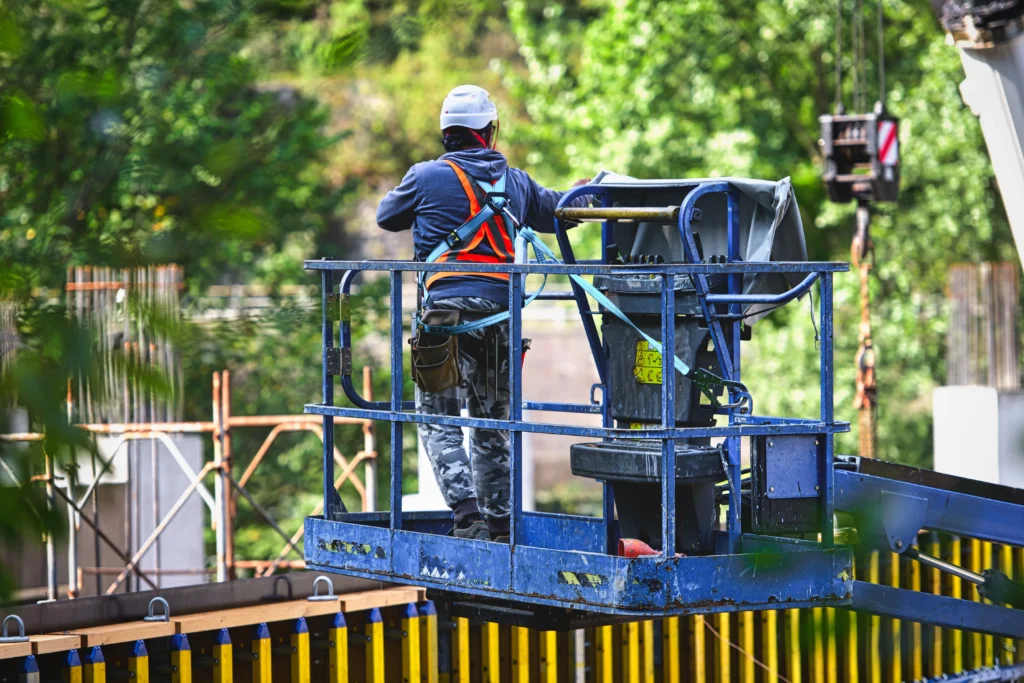
Spotters provide critical visibility and communication when maneuvering in tight areas. Without them, operators risk collisions, tip-overs, or striking overhead structures.
9. Poor Communication Between Crew Members
Clear signals and radios are essential when multiple workers are involved. Miscommunication can lead to unexpected movements, equipment damage, or injuries.
10. Skipping Regular Maintenance
Even the best inspection habits cannot replace scheduled maintenance. Lifts require periodic service by qualified technicians to replace worn-out parts and check hydraulic and electrical systems.
Example: In a 2023 incident in British Columbia, a maintenance lift collapsed due to a corroded support pin that had not been inspected for over a year.
Ask Yourself:
If your crew had to use an aerial lift today, would every operator pass a surprise inspection for aerial lift safety readiness?
FAQs:
Key Takeaways
- Aerial lift safety starts with daily inspections and fall protection compliance.
- Recognizing and avoiding common aerial lift hazards can prevent costly accidents.
- Consistent training and maintenance are non-negotiable for operator and site safety.